

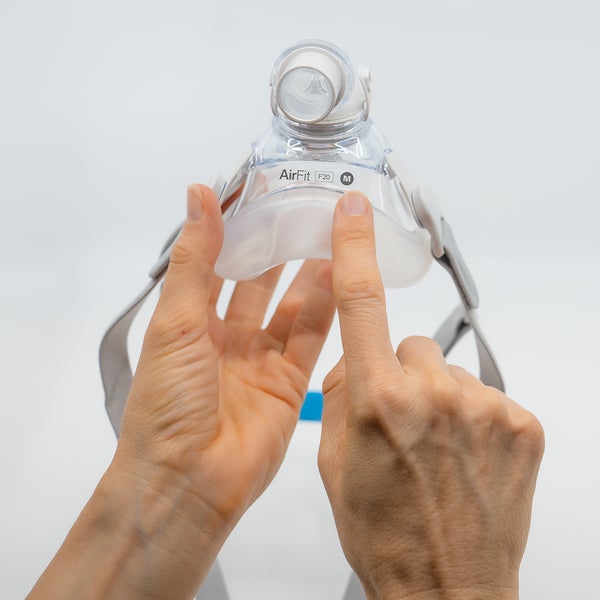
While your CPAP machine plays a critical role in therapy, your mask is the single most important comfort factor and often the difference between successful long-term treatment and frustration.
You may already know CPAP equipment is essential, but choosing the right mask can feel overwhelming. This guide breaks down today’s CPAP mask options and highlights what really matters, so you can make a confident, informed decision.
What Should You Look for in a CPAP Mask?
Just like footwear or clothing, CPAP masks are not one-size-fits-all. Mask choice depends largely on comfort, lifestyle, and sleep habits. Before choosing a mask, consider these key questions:
- Do you breathe through your mouth while sleeping?
- Do you sleep on your side, back, or stomach?
- Do you move or change positions frequently at night?
- Do you have facial hair?
Tip: Many modern CPAP machines now track mask leak data through companion apps. Reviewing this data after your first few nights can help fine-tune your mask choice and fit early on.
The Main Types of CPAP Masks
There are three primary CPAP mask styles available:
In addition to mask style, CPAP masks also differ by hose connection type, which can significantly impact comfort and freedom of movement:
- Traditional front connection – the hose connects at the front of the mask near the nose or mouth. This is a classic design that works well for many sleepers.


- Top-of-the-head connection – the hose connects at the top of the head, keeping tubing out of the way and allowing greater freedom of movement, improved visibility, and easier side-to-side turning during sleep.

Choosing the right combination can make a noticeable difference in long-term CPAP comfort and therapy success.
Full Face Masks
Full face CPAP masks cover both the nose and mouth and are secured with multi-point headgear. They are ideal for users who need consistent airflow regardless of how they breathe during sleep.

A full face mask may be right for you if:
- You primarily sleep on your back
- You breathe through your mouth
- You experience frequent nasal congestion
- You’ve been prescribed higher CPAP pressures
Because full face masks distribute air over a larger surface area, higher pressures often feel more comfortable and less forceful. They’re also a strong option for people who struggle with mouth leaks.
Modern full face masks such as the ResMed AirFit F40 Full Face Mask now feature:
- Under-the-nose cushions (leaving the bridge clear) for fewer facial marks
- Lighter materials for reduced pressure points
- Quieter venting technology for bed partners
- Open field-of-view designs for reading or watching TV
Tip: Newer full face masks pair especially well with auto-adjusting CPAP machines (APAP), helping reduce leaks during pressure changes overnight.
Nasal Masks
Nasal masks cover only the nose and strike a balance between stability and minimal contact. They remain one of the most popular choices for CPAP users.

Nasal masks are well suited if you:
- Breathe comfortably through your nose
- Sleep on your side or change positions
- Want less facial contact than a full face mask
Because airflow is more direct, nasal masks can feel more responsive especially at moderate pressures. However, they may not be ideal if you frequently experience colds, sinus congestion, or mouth breathing.
If mouth breathing is an issue, a chin strap or gentle mouth-taping (when approved by a clinician) may help.
A standout example is the Philips DreamWisp Nasal Mask, featuring:
- Top-of-head tubing for freedom of movement
- Stable fit with minimal bulk
- Multiple cushion sizes included for easy sizing
Tip: Masks with top-of-head tubing are especially popular among active sleepers and users who track movement with sleep wearables.
Nasal Pillow Masks
Nasal pillow masks are the smallest, lightest CPAP masks available. They seal directly at the nostrils using soft silicone or gel pillows.

This style is ideal if you:
- Prefer minimal facial contact
- Feel claustrophobic in larger masks
- Travel frequently
- Have facial hair
- Watch TV or read before bed
Users often report fewer leaks due to the direct airflow path. However, because the air is delivered straight into the nostrils, higher pressures can feel intense for some users.
Popular models like the AirFit P10 Nasal Pillow Mask are known for being:
- Extremely lightweight
- Quiet during operation
- Easy to pack for travel
Tip: Many nasal pillow users benefit from heated tubing or waterless humidification to reduce nasal dryness especially at higher pressures.
Why the Right CPAP Mask Matters
A poorly fitting or uncomfortable mask can lead to leaks, disrupted sleep, and reduced therapy effectiveness. On the other hand, the right mask can make a real difference, helping you experience:
- Improved daytime energy
- Better focus and memory
- More stable mood
- Reduced cardiovascular risks associated with OSA
Finding the right mask can take time and is a learning process. It’s normal to try more than one before landing on the perfect fit. If you’ve tried multiple mask styles and still struggle to achieve a reliable seal, consider a custom-fit mask that offers a more personalized solution. Explore custom CPAP mask option here.
Remember, always be patient, make incremental adjustments to your therapy. Here are some practical tips to guide your decision:
- Understand the mask features. Read descriptions carefully and compare them to your current mask to see how they differ.
- Do your research. Check user reviews to learn about real-life experiences with the mask you’re considering.
- Try before you buy if possible. Visit a local CPAP store to see a demo and test the mask for comfort and fit. Ask questions about sizing, cushion types, and adjustments.
- Look for a Fitpacks. Fitpacks include multiple cushion sizes, increasing the likelihood of finding the right fit.
- Focus on small adjustments. Cushion size, headgear tension, and sleep position often make a bigger difference than switching machines.
Explore our CPAP mask collection to find the mask that fits your lifestyle and sleep habits. Don’t hesitate to reach out if you have any questions - better sleep is always worth the effort!
How to Select a Mask Frequently Asked Questions
How do I know which CPAP mask type is right for me?
It depends on your breathing habits, sleep position, and comfort preferences. Mouth breathers or those on higher pressures often do best with full face masks, while nasal or nasal pillow masks are ideal for nose breathers who want less bulk.
What should I do if my CPAP mask keeps leaking?
Check your cushion size, adjust the headgear, and ensure the mask is sitting properly on your face. Reviewing leak data from your CPAP app can also help identify fit issues early. Consider a custom-made CPAP mask.
Can I switch to a different CPAP mask if my current one is uncomfortable?
Yes. It’s very common to try a few different mask styles before finding the best fit. Comfort is key to long-term CPAP success.
Are top-of-the-head hose connections better than front connections?
They can be, especially for side sleepers or active sleepers. Top-of-head connections keep tubing out of the way and allow more freedom of movement.
How often should I replace my CPAP mask and parts?
Most masks should be replaced every 3-6 months, with cushions replaced more frequently depending on wear. Regular replacement helps maintain a good seal and effective therapy.


