

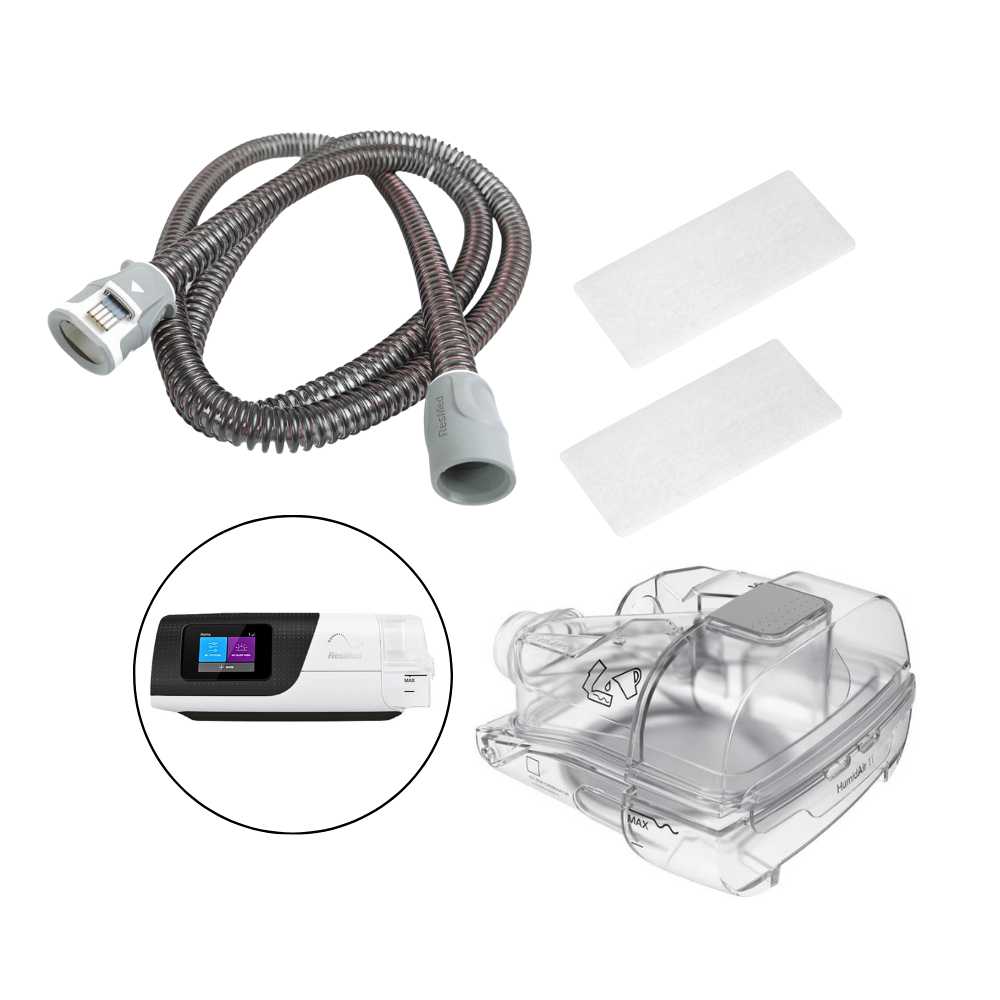
A CPAP machine relies on more than just the device itself to deliver effective sleep therapy. Supplies like filters, tubing, and water tanks play an important role in airflow quality, comfort, and overall machine performance. At HelloSleep.ca, we help Canadians understand how these CPAP machine supplies work and when they need to be replaced to keep therapy running smoothly. This guide explains what each supply does and which parts are replaceable.
Why CPAP Supplies Matter
CPAP supplies directly affect how your therapy feels and works. When parts become worn out or dirty, the most common issues users notice is reduced airflow, increased noise, dryness, and poorer sleep quality. Many people assume these problems are caused by the machine itself, but in most cases, it comes down to overdue supply replacement. Keeping your machine equipment clean and replacing them on time helps maintain air quality, reduce irritation, and ensure your therapy stays consistent.
CPAP Filters
CPAP filters are responsible for cleaning the air before it enters your machine. They trap dust, pollen, and other airborne particles, helping protect both your lungs and the internal components of your device. Most CPAP machines use either disposable fine filters, reusable foam filters, or a combination of both.

One of the most common questions people ask is how often filters should be replaced. The answer depends on the type of filter and your environment, but in general, disposable filters should be replaced very regularly, while reusable filters need frequent cleaning and occasional replacement. If filters become dirty or clogged, they can restrict airflow and negatively impact therapy.
Filters are fully replaceable and are one of the most frequently changed CPAP supplies. To learn more about replacement schedules, read CPAP Filters, Tubing & Humidifiers: What They Do and When to Replace Them.
CPAP Tubing
CPAP tubing carries pressurized air from the machine to your mask. Standard tubing is widely used across most machines, while heated tubing is designed to reduce condensation and improve comfort.

Over time, tubing can develop small cracks, become stiff, or collect buildup inside, all of which can affect airflow and increase noise. Many users search for why their machine has suddenly become louder or less effective, and worn tubing is often the cause.
Tubing is fully replaceable and should be changed if it becomes damaged, difficult to clean, or no longer flexible. If you’re dealing with condensation or dryness during therapy, read What Are the Benefits of a Heated CPAP Tube? for more guidance.
CPAP Water Tanks (Humidifier Chambers)
Water tanks, also known as humidifier chambers, add moisture to the airflow to prevent dryness in the nose, mouth, and throat. This is an important part of CPAP comfort, especially for long‑term users. Common issues include mineral buildup from water, cloudy plastic, cracks, or small leaks. These problems can affect both hygiene and performance. One of the most searched questions is whether distilled water is required, as this can impact how quickly buildup occurs.

Water tanks are replaceable and should be inspected regularly. If you notice signs of wear, it’s time to replace them. For more information, see Do I Have To Use Distilled Water With My CPAP Machine?
Which CPAP Supplies Are Replaceable?
Most CPAP parts of a machine are designed to be replaced individually, which makes it easier and more cost‑effective to maintain your therapy setup. Replaceable parts include filters, tubing, water tanks, and CPAP mask components. These are the parts that wear out over time and should be monitored regularly. The only parts that are not replaceable are the internal components of the machine, such as the motor and electronics. Taking care of your supplies helps reduce strain on these internal parts and can extend the life of your CPAP machine.
Summary
Filters, tubing, and water tanks may seem like small parts, but they have a big impact on how well your CPAP therapy works. They are all replaceable components that wear out over time and are a common cause of airflow issues, noise, and discomfort when not maintained properly. By monitoring and replacing these machine supplies regularly, you can improve comfort, maintain clean airflow, and keep your CPAP machine performing at its best.
CPAP Supplies: Filters, Tubing, Water Tanks, Frequently Asked Questions
Can old CPAP supplies affect therapy quality?
Yes. Dirty or worn machine parts can reduce airflow, increase noise, and cause discomfort.
Why does my CPAP smell or sound louder than usual?
This is often caused by dirty filters, worn tubing, or buildup in the water tank.
Can I clean CPAP supplies instead of replacing them?
Cleaning helps, but it does not replace the need for regular part replacement.
Do all CPAP machines use the same supplies?
Some CPAP parts may are universal, but most are machine or brand specific.
Are CPAP supplies covered by insurance?
Coverage varies. Learn more in Buying CPAP With Insurance: Reimbursement Guide & Checklist.


